

Waterjet manufacture 6000mm x 3000mm waterjet cutting machine for metal cutting
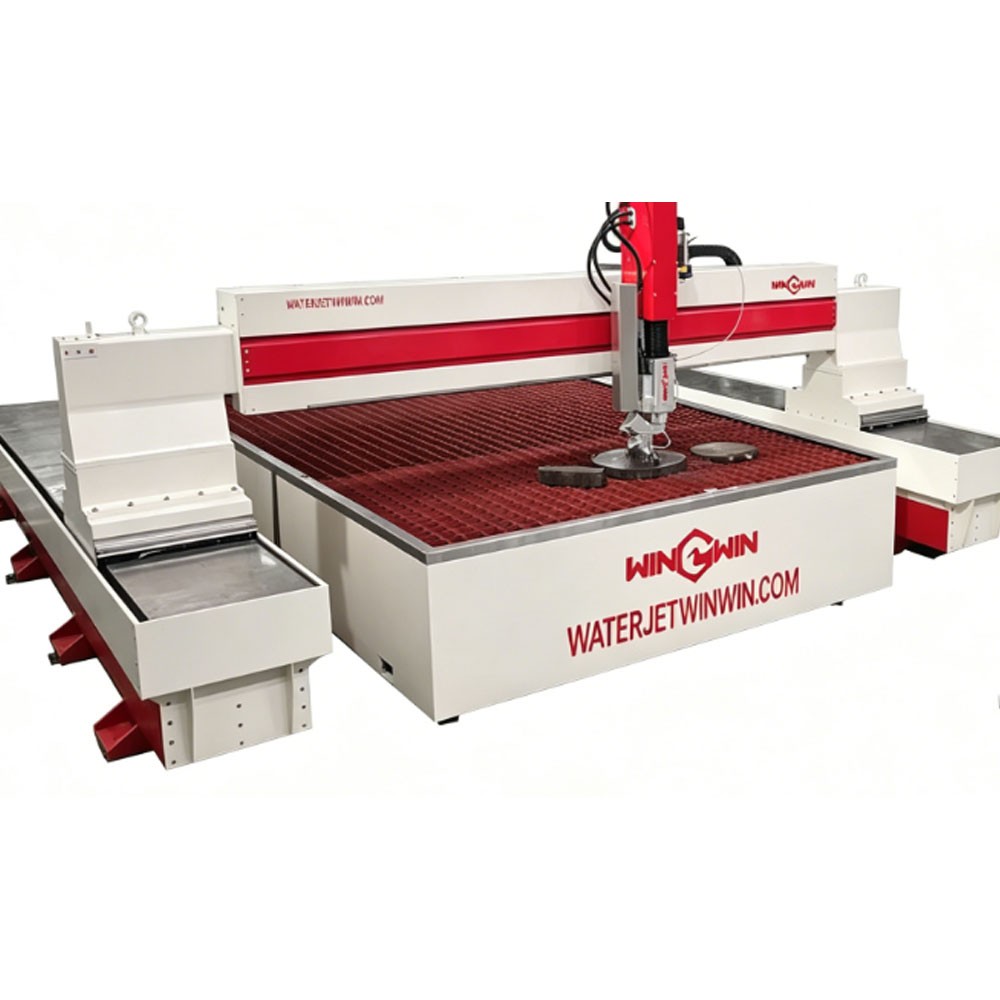
Waterjet manufacture 6000mm x 3000mm waterjet cutting machine for metal cutting
| 1. Cutting Table | 6030 5A waterjet machine |
| 2. CNC Controlling Software | WEIHONG |
| 3. Intensifier Pump | 100,000psi waterjet pump |
| 4. Cooling System | Industrial Grand |
| 5. Water Softener | Five-stage filtration system |
| 6. Abrasive Feeder | 200L |
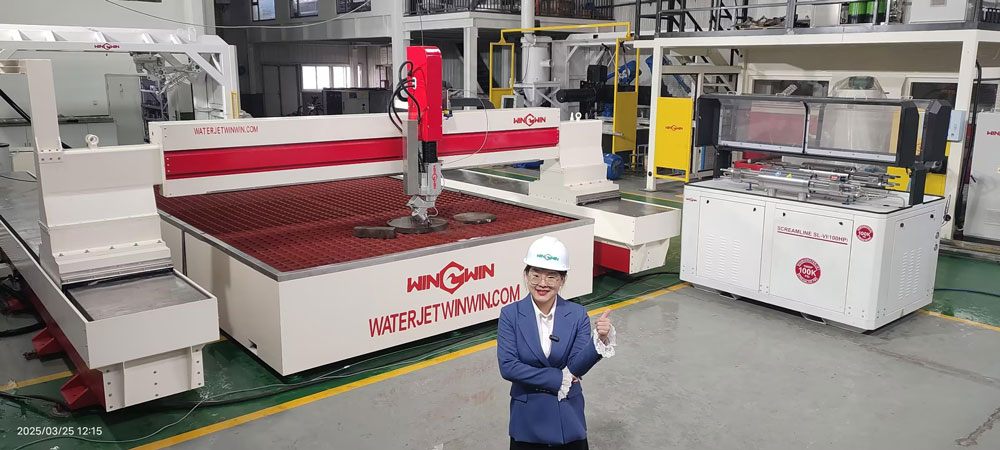
| Cutting Range | X-Axis : 6000mm ,Y-Axis : 3000mm Z-Axis : 260mm |
| Control Accurcy | ±0.01mm |
| Re-position accuracy | 0.025 |
| Max cutting speed | 10m/min |
| Oprating software | WEIHONG CNC System |
| Max swing angle | ±68° |
| Swing angle accuracy | ±0.01° |
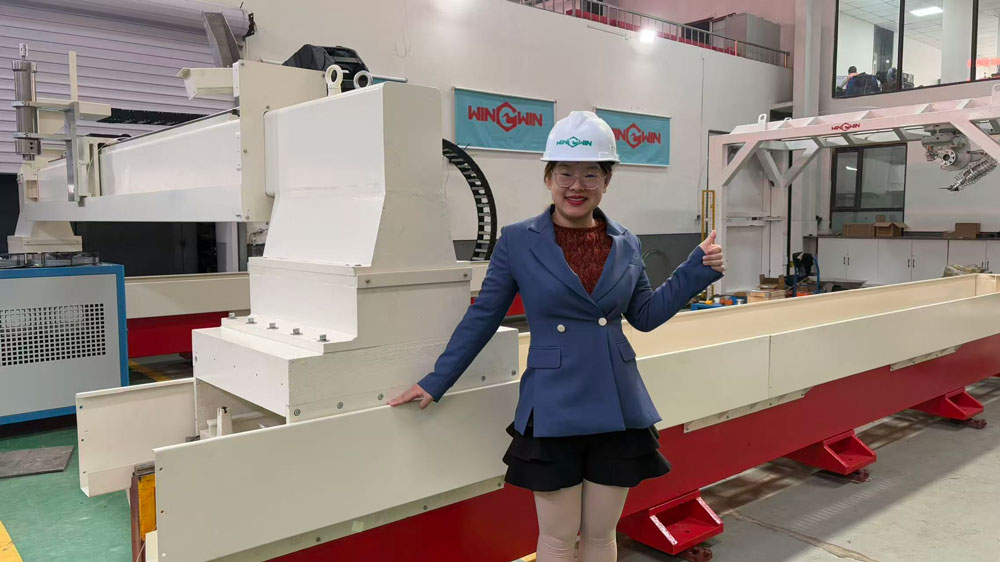
| Max Operating Pressure | 90.000ps |
| Operating Pressure | 78.000psi-87.000psi |
| Power | 45KW(60hp) |
| Max Water Flow | 4.5L/min |
| Oil Tank Volume | 211L |
| Weight | 2.1t |
| Dimension | 2126x1364x1500mm |
Featuring a unique hydraulic-locking tie-rod design, this unit can achieve an operating pressure of up to 90,000 psi, delivering cutting efficiency 50%–70% higher than standard pressure pumps.
● Cuts materials quickly, reducing abrasive costs by 50%
● Accelerates project completion, reduces labor hours, and saves on labor costs
● Produces smoother cut surfaces, minimizing the need for secondary processing—a result standard pressure pumps cannot achieve
● Capable of cutting metal materials up to 300 mm thick, achieving faster cutting speeds and smoother cut surfaces
● Pressure is adjustable within the range of 10,000 psi to 90,000 psi, making it suitable for cutting a wide variety of materials
● Effectively reduces operating costs, providing a significant competitive advantage in the market
● Features an advanced quick-change wear-part design, resulting in shorter maintenance times, fewer maintenance intervals, and more stable equipment performance
How accurate are Waterjet machines?
Waterjet cutting and CNC machining (milling, turning) are both high-precision manufacturing processes, but waterjet cutting offers distinct advantages in several key areas:
1. No heat-affected zone
CNC machining generates frictional heat, which can cause material hardening, warping, or microcracks. Waterjet cutting is a cold-cutting process that generates absolutely no heat, so it does not alter the material’s original properties. This makes it an ideal choice for processing heat-sensitive alloys, composite materials, and hardened steel.
2. Wider Range of Applicable Materials
CNC machining struggles with soft, elastic, or layered materials such as rubber, foam, gaskets, and carbon fiber—tool pressure can cause these materials to deform or delaminate. Waterjet cutting can cut virtually any material, from titanium alloys and granite to glass, plastics, and even food, without the need to change tools or make special adjustments.
3. No Tool Wear, Low Changeover Costs
CNC machining requires expensive carbide or diamond tools, which wear out, break, and need frequent replacement. Waterjet cutting uses only water and garnet—these consumables are inexpensive and require no sharpening. For small-batch or prototype production, waterjet cutting completely eliminates tooling costs.
4. Greater single-pass cutting thickness
CNC machining of thick plates or deep cavities requires multiple passes and tool changes, resulting in longer cycle times. Waterjet cutting can cut steel over 6 inches (150 mm) or foam over 12 inches (300 mm) in a single pass; thickness is limited primarily by the machine’s Z-axis travel.
5. No complex clamping required for thin sheets
CNC machining of thin sheets typically requires vacuum chucks or double-sided tape to prevent vibration. Waterjet cutting is a non-contact process that exerts virtually no lateral force on the workpiece; thin sheets require only simple support and do not need heavy-duty fixtures.
Conclusion: CNC offers greater advantages when machining internal threads, blind holes, or high-precision, high-volume metal parts. However, if material integrity, absence of heat damage, and process versatility are priorities, waterjet cutting is the superior choice.
To sum up, waterjet cutting machines can cut nearly all types of metals, including steel, stainless steel, aluminum, copper, brass, titanium, bronze, and high-performance alloys. It is a safe, efficient, and cost-effective choice for modern metal fabrication.
If you need clean, precise, and distortion-free metal parts, waterjet cutting machine is the ideal solution.
Related
-
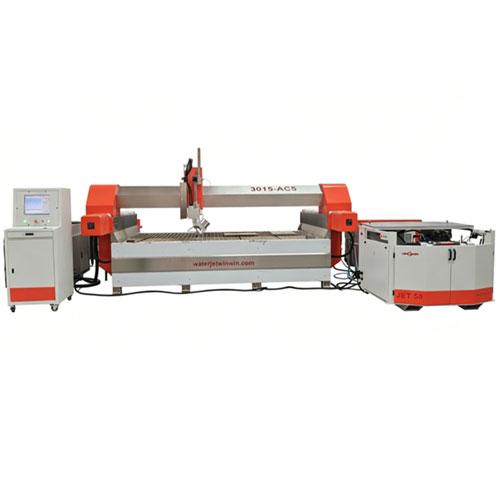 Quick View
Win-Win × IGEMS Partnership: 3015 5A Waterjet Cutting Machine for Marble Cutting
-
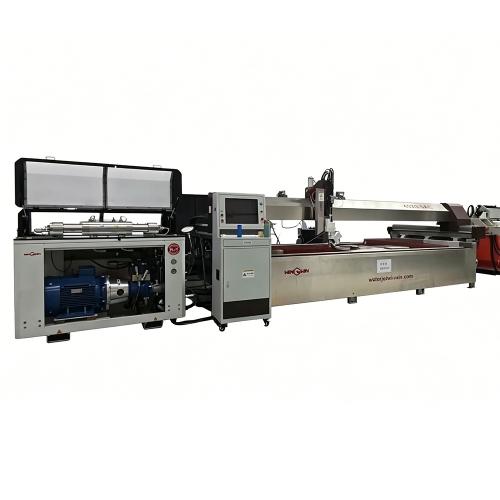 Quick View
4020 5-Axis Waterjet Cutting Machine - High Precision for Metal Cutting
-
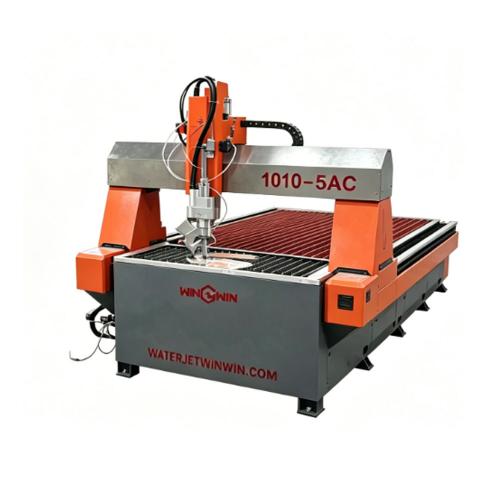 Quick View
1010 5 aixs small waterjet cutting machine for marble cutting waterjet machine factory
-
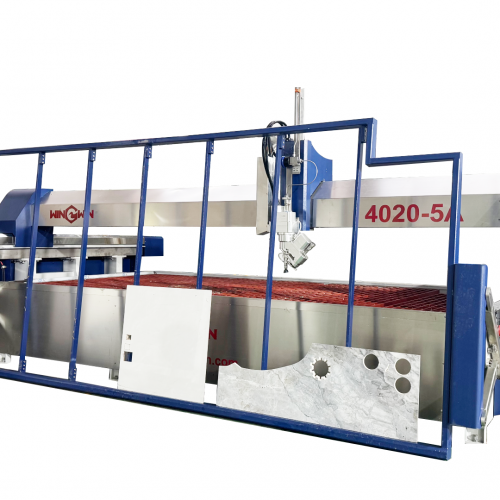 Quick View
4020 5-Axis Waterjet Cutter for Marble Cutting
-
 Quick View
Small Waterjet Cost for Glass Cutting in Brazil
-
 Quick View
Waterjet metal cutting 2000mm x 1500mm waterjet cutting machine
-
 Quick View
How to Avoid Precision Errors Caused by Long Travel in 10-Meter Table Waterjet Cutting of Metal Plates
-
 Quick View
Cut tiles with Double Z-Axis 4020 Waterjet, Improve Your Output, Reduce Downtime
-
 Quick View
Waterjet Cutting Machine Price WW3525 with 3500mm*2500mm cutting table used for metal cutting
-
 Quick View
4020 WATERJET CUTTING MACHINE